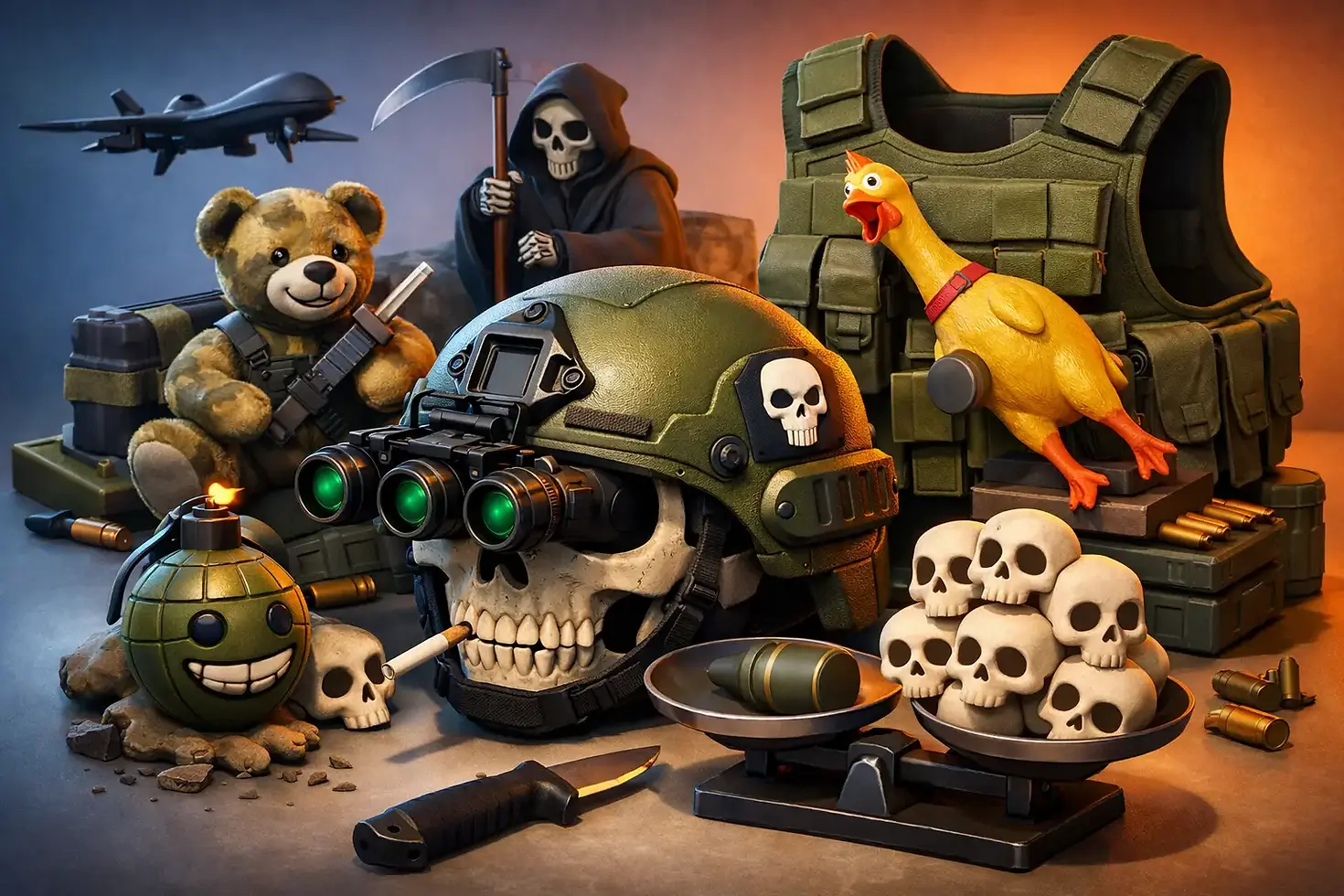
Military Dark Humor Gear That Knows the Weight
- Christopher Stockton
- Jul 14
- 5 min read

A shirt can say what nobody in the smoke pit, motor pool, aid station, or barracks feels like saying out loud: that the work got weird, the hours got long, and somehow you are still standing. Military dark humor gear lives in that space. It is not just a joke printed on fabric. At its best, it is a signal to the people who understand the language without needing the whole backstory.
That distinction matters. Dark humor can be a pressure valve, a bond, and a way to reclaim a little control after chaos. It can also miss badly when it is made by people who treat service, trauma, or loss like an aesthetic. The difference is usually obvious to anyone who has carried the weight.
Why Military Dark Humor Gear Exists
Humor has always shown up where people work close to danger, death, exhaustion, and absurdity. Military life contains all of it. There is paperwork that survives everything, equipment that fails at the least convenient time, chow hall coffee with its own tactical capabilities, and the strange experience of being expected to function normally after something that was not normal at all.
A dark joke does not erase the hard part. It gives people a way to look at it without letting it own the whole room.
For many service members and veterans, the joke is shorthand. It can mean, “I have been there,” without forcing someone to unpack a deployment, an injury, a loss, or the difficult stretch after coming home. It can create instant recognition across branches, MOSs, units, and generations. Someone sees the patch, mug, hat, or hoodie and gets it. That small moment of being understood counts more than outsiders tend to realize.
The gear also carries identity. Not the polished recruitment-poster version of identity. The real version - tired, capable, sarcastic, loyal, occasionally held together by caffeine and bad decisions. That is why generic patriotic graphics often feel flat next to a design that catches an actual truth of the job.
The Line Between Gallows Humor and Cheap Shock
Not every dark joke is good gear. Some designs punch up at the system, the misery of shift life, impossible standards, bureaucracy, bad sleep, and the universal curse of broken equipment. Those can feel earned because they target experiences people share.
Other designs punch down. They make a spectacle of civilians, casualties, mental illness, sexual assault, injury, or people who did not get to walk away. That is not hard humor. It is usually lazy humor wearing a tactical font.
The strongest military dark humor gear understands that a joke has an audience and a setting. A patch that lands with your people may be a terrible choice for a family event, a memorial, a public-facing job, a clinical setting, or anywhere someone is already carrying fresh grief. Wearing something because it gets a reaction is not the same as wearing something because it says something true.
There is no universal rulebook, because units, generations, and individual experiences differ. A veteran who jokes about their own deployment may not want anybody else turning that experience into a slogan. A medic may laugh at one trauma joke and hate another. Context is not weakness. It is situational awareness.
What Makes the Humor Feel Earned
Good designs are specific enough to feel lived-in but broad enough that they do not expose private details or turn real suffering into merchandise. They recognize the operational absurdity without pretending the job is only misery.
A solid piece of gear usually has a few things working in its favor. The message is readable without a paragraph of explanation. The reference comes from actual culture, not a movie version of military life. And the design knows when to stop. If the punchline requires seven skulls, fake blood, and a wall of text to prove it is edgy, it has already lost.
There is also a difference between a statement piece and a wearable one. The loudest shirt in the room may be perfect for a buddy’s garage, a veteran event, or an off-duty weekend. It may be a bad fit for a school pickup, a hospital waiting room, or a first date with someone who has no reason to decode your coping mechanism. You do not need to sanitize yourself. You do need to read the room.
That is the trade-off: gear can create belonging inside the community while creating distance outside it. Neither outcome is automatically wrong. The point is to choose intentionally.
Humor Is Not a Substitute for Support
The old answer to stress was often some version of “suck it up,” followed by a joke, a drink, and another shift. Plenty of people survived that way. Plenty of people also paid for it later.
Dark humor can help someone get through a moment. It can make the unbearable speakable. But it cannot process trauma for you, repair a marriage, fix insomnia, or replace a conversation with somebody qualified to help. A funny hoodie is not a wellness plan, and nobody should pretend it is.
The stronger message is not “stop joking.” It is “do not let the joke become the only thing you say.” You can laugh at the darkness and still admit you are not sleeping. You can make fun of command nonsense and still tell a friend you are worried about them. You can be the dependable one and still need help.
That is the truth behind “The Strong Need Help Too.” Strength is not acting untouched. Strength is recognizing when the weight has become too much to carry alone.
Buying and Wearing It With Some Judgment
Before buying military dark humor gear, ask one blunt question: who is this for? If the answer is “my people, because they will understand,” you are probably on solid ground. If the answer is “because it will offend strangers,” it may be worth reconsidering.
Look for quality beyond the phrase. A design should be legible, durable, and intentional. A morale patch needs clean details at a small size. A shirt needs a layout that does not turn into an unreadable block across the chest. A mug can carry a more niche line because it is often used around familiar people, while a hat is public all day. The format changes the impact.
Consider where the item will be worn, too. Off duty is different from on base. A gym is different from a family barbecue. A private group chat is different from a public social feed. Humor that is safe inside a trusted circle can become a problem when stripped of that circle and its context.
If you are buying for someone else, avoid guessing at their trauma. A broad, insider reference is safer than a joke tied to injury, grief, combat, or a particular incident. The goal is connection, not forcing someone to laugh at something they have not chosen to revisit.
The Gear Should Carry the Culture, Not Exploit It
There is a reason military and first responder communities can spot fake culture from across a parking lot. We know the difference between someone speaking from the work and someone selling a costume version of it. The same applies to apparel.
Critical-Run was built around that line: make room for the sarcasm, but do not lie about what sits underneath it. The culture is funny because it has to be sometimes. It is also exhausted, proud, protective, grieving, and human.
The best military dark humor gear does not ask people to perform toughness for strangers. It gives them a small, honest way to recognize each other. Wear what makes your people feel seen. Save the rest for the drawer. And if the joke is covering something heavier than usual, let somebody you trust hear the part that is not funny.


Comments