
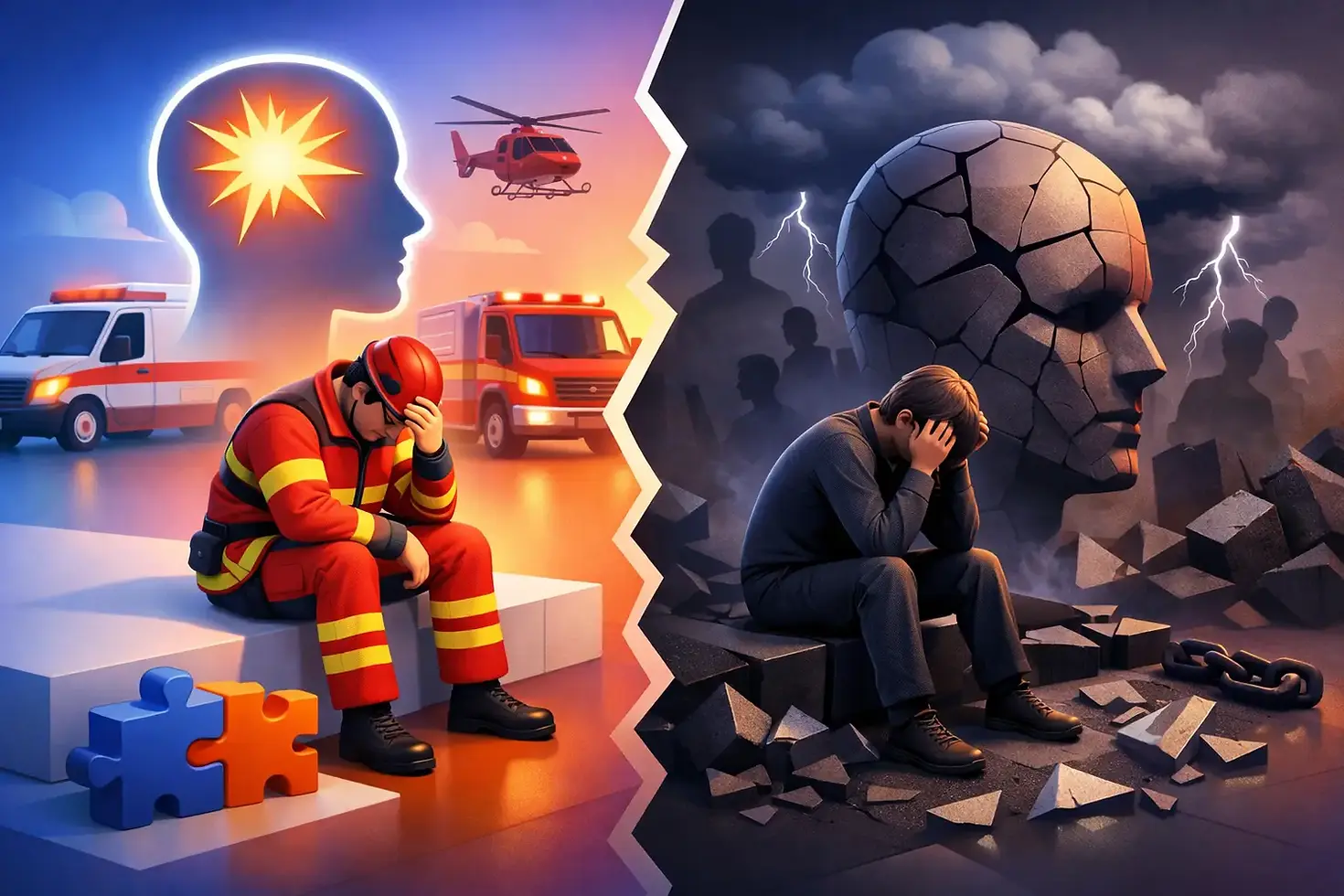
Critical Incident Stress Versus PTSD Explained

A call can end at 0700 and still be running in your head at 0300. The scene is cleared, the chart is signed, the rig is restocked, and your body has apparently missed the memo. Understanding critical incident stress versus PTSD matters because not every rough reaction is PTSD, but neither is every rough reaction something you can just laugh off, bury under overtime, or fix with a bad joke at the station.
For responders, nurses, dispatchers, military members, and anyone who works where other people’s worst day becomes part of the shift, stress exposure is not a rare event. It is baked into the work. The question is not whether a call got to you. The question is whether your system is recovering, or whether the call is starting to run your life.
Critical Incident Stress Versus PTSD: The Core Difference
Critical incident stress is a broad term for the emotional, physical, and behavioral response that can follow a disturbing or high-pressure event. That event might be a pediatric arrest, a line-of-duty death, a fatal wreck, a suicide, a violent call, a bad outcome involving someone you know, or a scene that simply hit too close to home.
Critical incident stress is not automatically a mental health diagnosis. It describes a human nervous system reacting to something it was not built to absorb cleanly. A person may be jumpy, exhausted, angry, detached, tearful, nauseated, unable to sleep, or stuck replaying details. They may also feel fine for a few days and then get knocked sideways by a smell, a sound, a street corner, or the next call that looks familiar.
PTSD, or post-traumatic stress disorder, is a diagnosable condition. It involves trauma-related symptoms that persist and interfere with work, relationships, sleep, safety, or daily functioning. PTSD is not defined by whether the call was objectively awful enough by someone else’s standard. It is defined by how the exposure and symptoms are affecting the person over time.
The short version: critical incident stress can be an expected response after an abnormal event. PTSD is what may be happening when trauma symptoms do not ease, get worse, or start taking over the parts of life that used to feel manageable.
A Bad Week Is Not a Character Flaw
After a hard call, plenty of responders have reactions that feel unlike them. Sleep gets weird. Appetite changes. You snap at people over nothing. You feel flat on calls that should bother you, then lose it while standing in the cereal aisle. You keep your phone on loud because silence feels wrong. Or you want to work nonstop because being busy is easier than being alone with your own head.
Those reactions can be part of the immediate aftermath of trauma. The nervous system stays on alert because, as far as it knows, the threat has not ended. This is not weakness. It is not a failure of tactical mindset. It is biology doing a poor job of distinguishing between a completed call and an ongoing danger.
Recovery is not always clean or fast. Some people need a few days, some need weeks, and some need more support because the incident stirred up older losses, prior trauma, exhaustion, burnout, or moral injury. The job also makes the timeline messy. You may have a brutal call on Monday and run another one like it on Wednesday. There is not always room to come down before the next tone drops.
When Stress Starts Looking More Like PTSD
A clinician evaluates PTSD using specific diagnostic criteria, but there are field-level signs worth taking seriously. The biggest issue is not whether you had a reaction. It is whether you are becoming trapped in it.
Intrusion is one common sign. That can mean unwanted memories, nightmares, flashbacks, or feeling as if you are back on scene when something reminds you of it. Avoidance is another. You may refuse a route, dodge conversations, call out from shifts, avoid sleep because of dreams, or keep yourself chemically or mentally numb so nothing can get close.
PTSD can also show up as changes in mood and thinking. You may feel detached from your crew or family, carry shame that does not match the facts, blame yourself for things outside your control, or lose interest in people and routines that used to matter. Then there is the hyperarousal side: insomnia, anger, hypervigilance, a constant startle response, reckless behavior, and a body that never seems to leave fight-or-flight.
None of these symptoms alone proves PTSD. Sleep loss, chronic burnout, depression, anxiety, grief, traumatic brain injury, substance use, and shift work can overlap in ugly ways. That is exactly why self-diagnosing from a social media checklist is not the move. If symptoms are hanging on, escalating, or wrecking your ability to function, get a trauma-informed professional involved.
The Calendar Matters, But It Is Not Everything
Time is one useful dividing line. PTSD symptoms generally need to last longer than a month for a formal diagnosis. In the first month after trauma, a clinician may consider acute stress disorder if symptoms are significant and disruptive.
But do not use the calendar as permission to white-knuckle it for 30 days. If you are not sleeping, are drinking more to shut your brain off, are exploding at your family, cannot safely do your job, or are thinking about hurting yourself, the fact that it has only been two weeks does not make it less serious.
The other dividing line is impairment. A medic can still show up, pass equipment checks, crack jokes, and perform well on calls while falling apart everywhere else. Functioning at work is not the only measure. If your relationships, parenting, health, judgment, or sense of self are getting crushed, that counts.
What Actually Helps After a Critical Incident
The old responder playbook often looks like this: make a joke, say you are good, take the next call, and keep it moving. Humor can be a pressure valve. It can also become armor welded on so tightly that no one can reach you. The goal is not to stop being tough. The goal is to stop confusing isolation with toughness.
Start with the basics that keep a nervous system from getting further behind: sleep when you can, eat actual food, hydrate, move your body, and reduce alcohol or other substances that are being used as an off switch. None of that replaces care, but deprivation makes trauma symptoms louder.
Tell one trustworthy person the honest version. Not the cleaned-up report version. A partner, friend, peer, chaplain, supervisor who has earned trust, or clinician can all be the right person depending on the situation. You do not need to tell the whole story in one sitting. You do need to stop carrying it entirely alone.
Peer support can be powerful when it is confidential, voluntary, and led by people who understand the culture. It can also fall short when it turns into forced group disclosure, gossip, or a check-the-box debrief that leaves people feeling exposed. Mandatory emotional unloading immediately after an incident is not right for everyone. Some people need quiet, sleep, practical support, and the chance to choose when and how they talk.
For persistent trauma symptoms, trauma-focused therapy can help. Approaches such as cognitive processing therapy, prolonged exposure, and EMDR have evidence behind them for PTSD. The best fit depends on your symptoms, history, schedule, and readiness. A good clinician will not treat you like a broken civilian who needs a lecture about stress. They will understand that you may need to stay operational while building a life that is not ruled by the job.
When to Treat It as Urgent
Get immediate help if you are thinking about suicide, self-harm, harming someone else, or you cannot trust yourself to stay safe. In the US, call or text 988 for the Suicide & Crisis Lifeline. If there is immediate danger, call 911 or go to the nearest emergency department.
Urgent help is also warranted if you are driving impaired, blacking out, relying on substances to sleep or get through shifts, having panic symptoms that compromise safety, or feeling detached enough that you are afraid of what you might do. Pulling yourself from duty for support is not abandoning your crew. Showing up unsafe helps nobody.
You have seen what happens when people wait too long to ask for help. Do not apply a different standard to yourself. The strong need help too, and getting it is one way you stay in the fight without losing the parts of you that existed before the job.


Comments